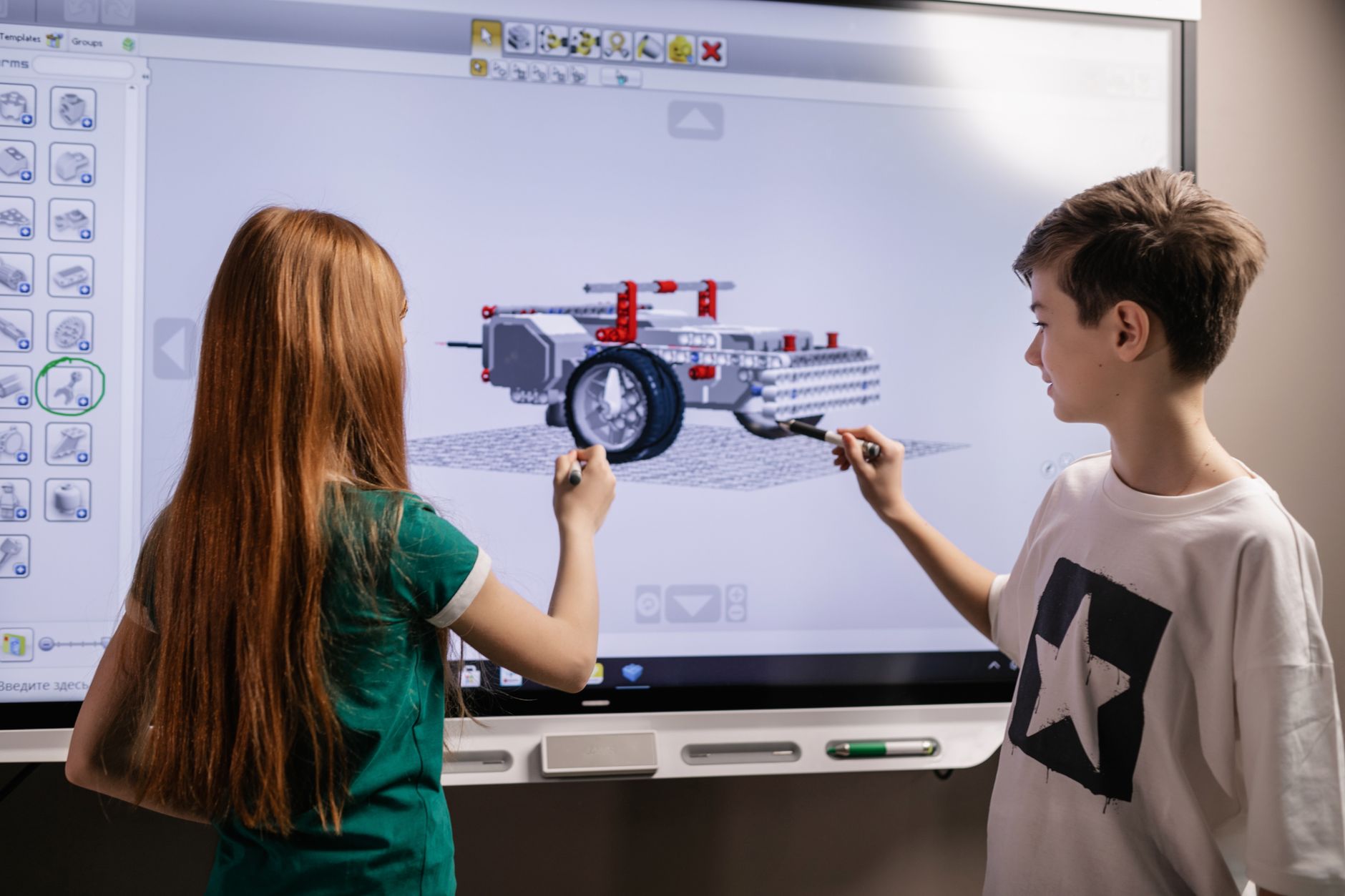

The timeline of technology, traced from the early 1970s to today, is really just the story of how humans compressed centuries of change into a few decades. I was thinking about this recently while watching my nephew do his homework on a tablet, asking a voice assistant to explain photosynthesis. His grandfather, born in 1951, punched time cards at a factory. Same species, completely different cognitive environment, and that gap happened surprisingly fast.
What gets lost in most tech history coverage is the messy middle: the decade-long stretches where nothing seemed to move, then suddenly everything changed at once. The interesting question isn’t “what got invented?” It’s why that particular thing tipped the whole world over. I’ll try to answer that as we go.
Key Inventions by Decade
The 1970s gave us the microprocessor, probably the single hinge everything else swings on. Intel’s 4004 chip, released in 1971, was roughly the size of a fingernail and could do about 60,000 operations per second. Laughable now, but it meant logic could move off mainframes and into smaller machines. By 1979 Sony had the Walkman, and personal technology became something you carried.
The 1980s brought the IBM PC (1981) and the Apple Macintosh (1984), followed quickly by the laser printer and the first commercial cell phone call in 1983. The 1990s were the internet decade, but also the decade of the CD, the DVD, and GPS opening to civilian use in 1993. By the 2000s, the smartphone was assembling itself from existing parts: camera, browser, music player, GPS, all folded into one device.
The Rise of Personal Computing
The Macintosh launch is a good thread to pull. Steve Jobs and his team didn’t invent the graphical interface; they borrowed heavily from Xerox PARC, where researchers had built something remarkably similar years earlier but never commercialised it. What Apple did was make it accessible, sell it with a story, and price it at $2,495 in 1984 (roughly $7,500 today), just low enough that small businesses could stretch to it.
Within five years, desktop publishing had gutted the traditional typesetting industry. Whole craft trades disappeared. That’s the pattern I keep seeing across the timeline of technology: an invention arrives, sits quietly while infrastructure catches up, then wipes out an adjacent industry almost overnight. The people inside that industry almost never see it coming, even when the invention is already a decade old.
Mobile Technology Revolution
The first iPhone shipped in June 2007. I remember reading the reviews and thinking it was overpriced and fragile. Wrong on both counts, well, mostly. Within three years mobile internet traffic had overtaken desktop in several markets, and app stores had created a software economy that simply hadn’t existed before. Developers who’d spent careers writing enterprise software were suddenly writing games for 99 cents.
The adoption curve was steeper than almost any prior technology. Radio took roughly 38 years to reach 50 million users, television took 13, and the internet took about 4. Smartphones, depending on your starting point, got there in closer to 2. That compression is its own kind of milestone on the timeline of technology, and it keeps accelerating.
The Internet and Its Expansion
Tim Berners-Lee proposed the World Wide Web in 1989 and had the first website running by late 1990. For the first few years it was genuinely just academics sharing papers. Then Marc Andreessen’s Mosaic browser arrived in 1993, added images, and changed the feel of the thing completely. By 1995 Amazon and eBay were open for business.
What the internet actually did was collapse geography. A small manufacturer in rural Ohio could suddenly reach buyers in Seoul without a distributor. Obvious now, but quietly revolutionary at the time, and most established retailers took about ten years to respond seriously. By then Amazon had a decade-long head start.
Emerging Technologies Today
Right now the clearest candidates for the next big hinge are large-scale AI models, CRISPR gene editing, and solid-state batteries. I’d add spatial computing, though I’m genuinely unsure whether current hardware is good enough yet to make it stick. Any of these could follow the Macintosh pattern: invented, overlooked, then suddenly everywhere.
CRISPR is worth singling out because it operates on a different timeline than software. Regulatory approval in medicine runs 10 to 15 years minimum, so breakthroughs announced in research labs today might not reach patients until 2035. That lag makes it easy to underestimate. But from what I’ve seen in biotech coverage, the scientific consensus is that gene editing will reshape medicine more than any development since antibiotics.
Reflecting on Technology’s Evolution
Looking back across the full timeline of technology, one thing stands out: almost every transformative invention faced serious institutional resistance before it won. The PC was dismissed by IBM’s own executives as a hobbyist toy. The smartphone was called a niche product for early adopters. One prominent economist described the web in 1995 as no more significant than the fax machine. Being early and being wrong look identical from the outside, which is what makes these moments so hard to read in real time.
The better habit, I think, is to watch what infrastructure is quietly being built around a new technology. When you see standards bodies forming, developer communities growing, and boring enterprise software being rewritten to support something new, pay attention. That’s usually the five-year warning before something tips.
FAQs
What are the most significant technological milestones?
The microprocessor (1971), the personal computer (1981), the World Wide Web (1990), and the smartphone (2007) are widely considered the four hinge points on the modern timeline of technology.
How has technology changed over the decades?
Each decade compressed adoption faster than the last, moving from decades-long rollouts to global saturation in under two years, touching nearly every industry along the way.
Who are the most influential inventors in tech history?
Tim Berners-Lee, Steve Jobs, Gordon Moore, and Grace Hopper are consistently cited, though most breakthroughs were team efforts rather than solo achievements.