A client of mine handed out 200 paper cards at a trade show last spring, and two weeks later, she couldn’t find a single one on anyone’s desk. That’s a pretty common experience, I can tell you.
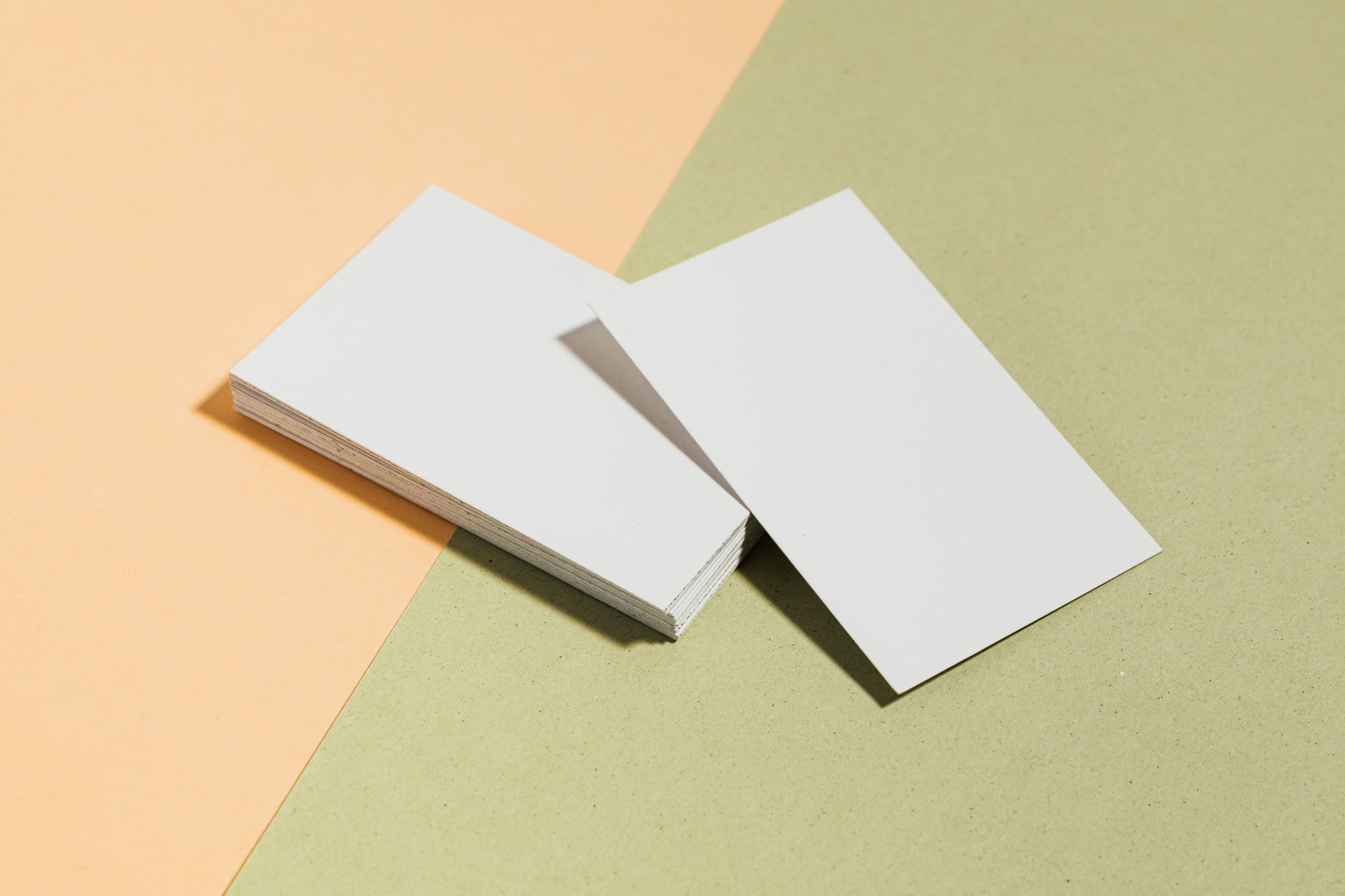
Aluminum business cards might cost more upfront, sometimes significantly more, but people keep them because they feel like something worth holding onto. Paper cards get shuffled, stacked, and tossed. Metal, on the other hand, tends to sit on a desk because tossing it feels wasteful—it’s just how we treat things that have weight and texture.
I’ve seen varying studies, but a figure that comes up often is about 85% of paper business cards disappear within a week. I can relate; I’ve tossed my fair share. In contrast, aluminum cards don’t have that problem nearly as much.
Aluminum Business Card Costs
The honest range is about $1 to $3 per card for a standard custom order, while a decent paper card runs from $0.05 to $0.20. So for 100 cards, you’re looking at $100–$300 compared to maybe $15 for paper. That’s a real gap you can’t ignore.
Suppliers typically set a minimum order of 50 to 100 cards. If you’re looking to order fewer than that, the price per card tends to spike. If you only need 20 cards for something specific, aluminum probably isn’t your best bet. But if you’re networking often, 100 cards feels like a solid starting point, and the cost math works out.
Thickness is more important than you’d think. Standard options range from 0.3mm to 0.8mm. Thinner cards (about 0.3–0.4mm) flex a bit and feel closer to a credit card, while 0.6mm or 0.8mm feels genuinely substantial, almost architectural. Personally, I’d choose 0.5mm as a default unless you have a good reason to choose otherwise. Heavier cards do cost more, and shipping fees can add up, so it’s a real tradeoff.
Opting for anodized aluminum opens up color options that plain metal doesn’t have. The anodizing adds a layer that accepts dye, meaning you can get various finishes like black, blue, or gold that engrave well too. Non-anodized options are mostly silver-toned and rely solely on the engraving for contrast.
Engraving Methods
When it comes to getting text and designs on aluminum business cards, there are two primary methods, and they yield different results.
Laser Engraving
With laser engraving, a laser burns away material creating recessed marks. The lines are sharp, so you can include fine detail without bleeding, and it stays consistent across a batch. Plus, turnaround is quicker—usually 7 to 10 business days for custom orders—because no chemicals are involved. Most online suppliers tend to prefer this method for those reasons.
Chemical Etching
Chemical etching uses acid to eat into the aluminum where it isn’t masked. This method provides a more uniform depth across large areas, which some designers prefer for logos. However, it’s slower, often leaning towards the 14-day mark. Minimum order quantities can also be higher due to the setup costs. The feel is a bit softer on the edges compared to laser engraving.
For most first-time buyers, laser engraving is the way to go. It’s faster, widely accessible, and meets most design needs without question. Chemical etching might be worth a look if you’re ordering a big run and want a specific aesthetic plus you can wait.
Placing Your First Order
Before you hit ‘buy’, make sure your artwork is in a vector format. Suppliers will ask for this, and if you send over a low-res logo from PowerPoint, you could end up with a card that looks worse than paper. Stick to Adobe Illustrator files or high-resolution PDFs.
Keep your design simpler than you think it needs to be. Aluminum business cards shine because of their material, not because they have too much info crammed in. Stick to your name, title, one way to contact you, and maybe a logo. Leaving some white (or metal) space conveys confidence, not laziness.
Request a digital proof before moving ahead with production. Most good suppliers will provide this and it’s worth waiting for, even if it adds a couple of days. You really don’t want to fix a mistake after you’ve had 100 cards engraved. Custom orders typically take between 7 to 14 business days, so keep this in mind if you have an event coming up.
Aluminum business cards aren’t for every scenario. If you’re in a high-volume networking situation, like giving out 50 cards a week, the costs can escalate quickly. Still, for client-facing pros, consultants, or anyone where first impressions count, the retention benefit is tough to match with paper at any price.
FAQs
Are aluminum business cards worth it?
For professionals where first impressions matter and the quantity is moderate, yes. Their retention rate compared to paper is much better, and the cost difference shrinks when cards actually get kept.
Can you write on aluminum business cards?
You can’t use a regular pen. A paint marker or silver pen can leave a mark, but it won’t feel natural. Most people prefer adding notes on their phones instead.
Do aluminum business cards go through airport security?
Yes, usually without any issues. The amount of metal is minimal, comparable to a belt buckle. Keeping them in a card holder rather than loose in your pocket helps, too.